
.png)


Blog
Reunification: Stories Worth Sharing from the FFA Perspective
June 29, 2026
By Selena Liu Raphael, Senior Advisor for TAY Initiatives
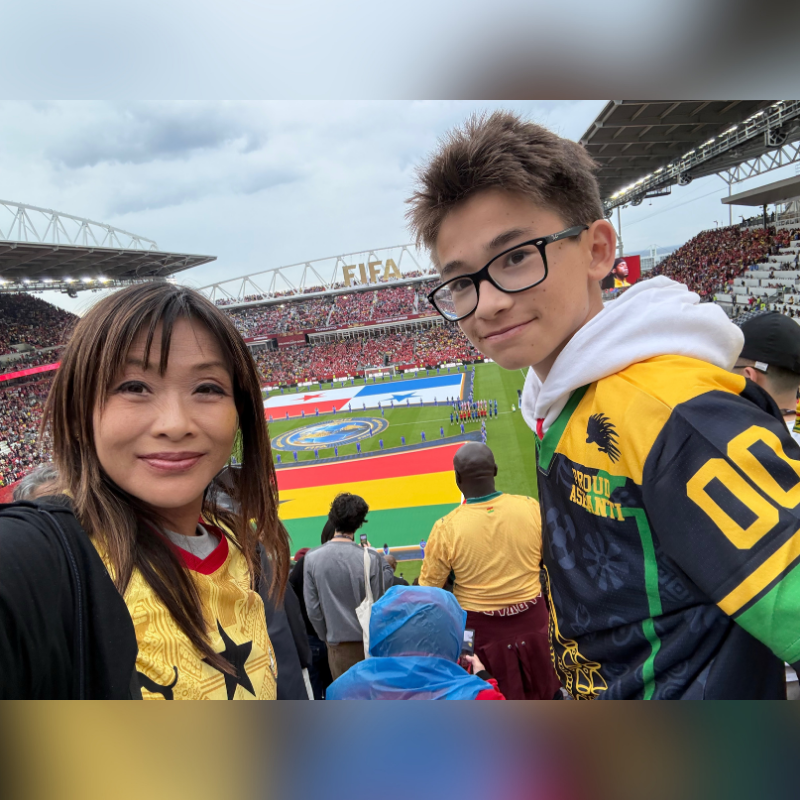
I love the World Cup. I love the game, the teams, the community, the players and their back stories most of all. Like so many others, I was captivated watching Vozinha, the 40-year-old goalkeeper for Cabo Verde in their first match, fighting for every save against World Cup favorite Spain. As the minutes ticked on, I no longer cared about my bracket. Every fiber in my being was wishing for Vozinha to earn his clean sheet. After the game, the story meant even more, seeing how emotional he was, wishing his grandparents, who raised him, had been alive to witness this moment. His mother also could not attend due to cost and visa issues. Then came the outpouring of support, and his mother was flown in to witness another Cinderella performance against Uruguay. Another favorite is this powerful letter, “Dear Roxane”, written by Cote d’Ivoire player, Yan Diomande. If you can read it all, it is a tribute to his sister and all the moments she backed him through disappointments and rejection. “You were the one who never stopped believing.”
You may be asking, “What do these stories have to do with Foster Family Agencies (FFAs) and reunification?”
Like the players above, while the credit for reunification belongs primarily to the parents themselves overcoming, there are often extraordinary stories behind the scenes of sacrifice, belief and support that undeniably helped these reunifications occur. Many of these came from foster parents. I want to share just a few stories that I have had the privilege of witnessing while working at some of our member FFAs.
In nearly 25 years working in this field, I cannot count how many times I have heard, “I could never do that. I could never parent a child and give them back.” My response is almost always the same. “There is no greater gift you could ever give a child than to parent them as if they were your own, while you help their parents reunify with them. And then if that doesn’t happen, you continue to parent them forever and adopt them.” FFAs sometimes get the reputation of being focused on adoption, which creates bias around whether to include them in child and family team meetings or court hearings. But the reality we all train resource parents to understand is that reunification is always the plan, and you are always the backup plan. This means holding a whole lot of people through a lot of conflicting kinds of pain. And it deserves all of the time and support and belief it takes. That additional focused time is what FFAs were tasked to do when they first started. If we could be there for the foster parents, they could be there for the parents and the children. This design was also meant to be an essential partnership with and support for the CSWs who have numerous other tasks to complete. The error would be to think that it doesn’t matter how a resource parent is approved, whether through an FFA or directly with the county. While technically that is true, the way to choose which path is right for you is who you trust to walk through the doors of your home and to hold you through the ups and downs of being part of the system.
Many prospective families come to us with years of painful infertility and miscarriages. The home study process is meant to assess many things, including whether an individual or couple is ready to experience the strong likelihood of additional loss. In one case, at the beginning of the process, the couple expressed uncertainty about how they would handle monitored visits. The promise was not that it would be easy, but that we would be here for them and support them. Monitoring visits would make the mom human and help them connect with her child. It was beautiful to witness their strength become, “We could never forgive ourselves if we got in the way and didn’t do everything we could to help this 16-year-old young mom to get her child back.” And she did.
I’ve had parents with us for 7 years and 15 reunifications before a child stayed. They had already grieved 10 years of infertility before that. I’ve had families adopt the first one. Some families foster for many years, and all of the children reunify until they do decide it is too much. But what is often too much is not having children come and go back, but how they, as foster parents, are treated.
I always remember a single dad foster parent we had for three young siblings. He experienced a lot of doubt and skepticism about his intentions as a single father. But he ended up being the perfect match for these kids because the reunification plan was with the children’s father. Not only did this foster parent monitor regular visits in public places as expected, as the court date drew nearer, but he invited this dad into his home to let him experience the nightly routine with the children so the move home would be smooth, and the dad would know what to do. In another case, we had a foster parent realize she did not want the family to miss all the milestones, so she would call the family when the baby took her first step and every time the toddler said a new word. I am still in touch with many families who still see the families of the children they fostered.
This month, we celebrate all the parents who overcome so much to reunite with their children, but we also want to honor and respect the resource parents who did whatever it took to help them get their children back, and the FFAs who hold them all through this process. When we are doing incredibly hard things, having the support and belief surrounding you can mean the world. It’s not the World Cup, but FFAs are facing their biggest challenge and need us more than ever. Here at the CA Alliance and Catalyst Center, we continue to do all we can to keep the word out and keep asking, just like Yan’s sister in the Dear Roxane letter, even while everyone keeps saying “No,” whether it be to the budget ask or other ways we try to help through the insurance crisis. We see you. And thank you. And know that reunification month would not be the same without your commitment to children and their families.
.png)